Payments Council
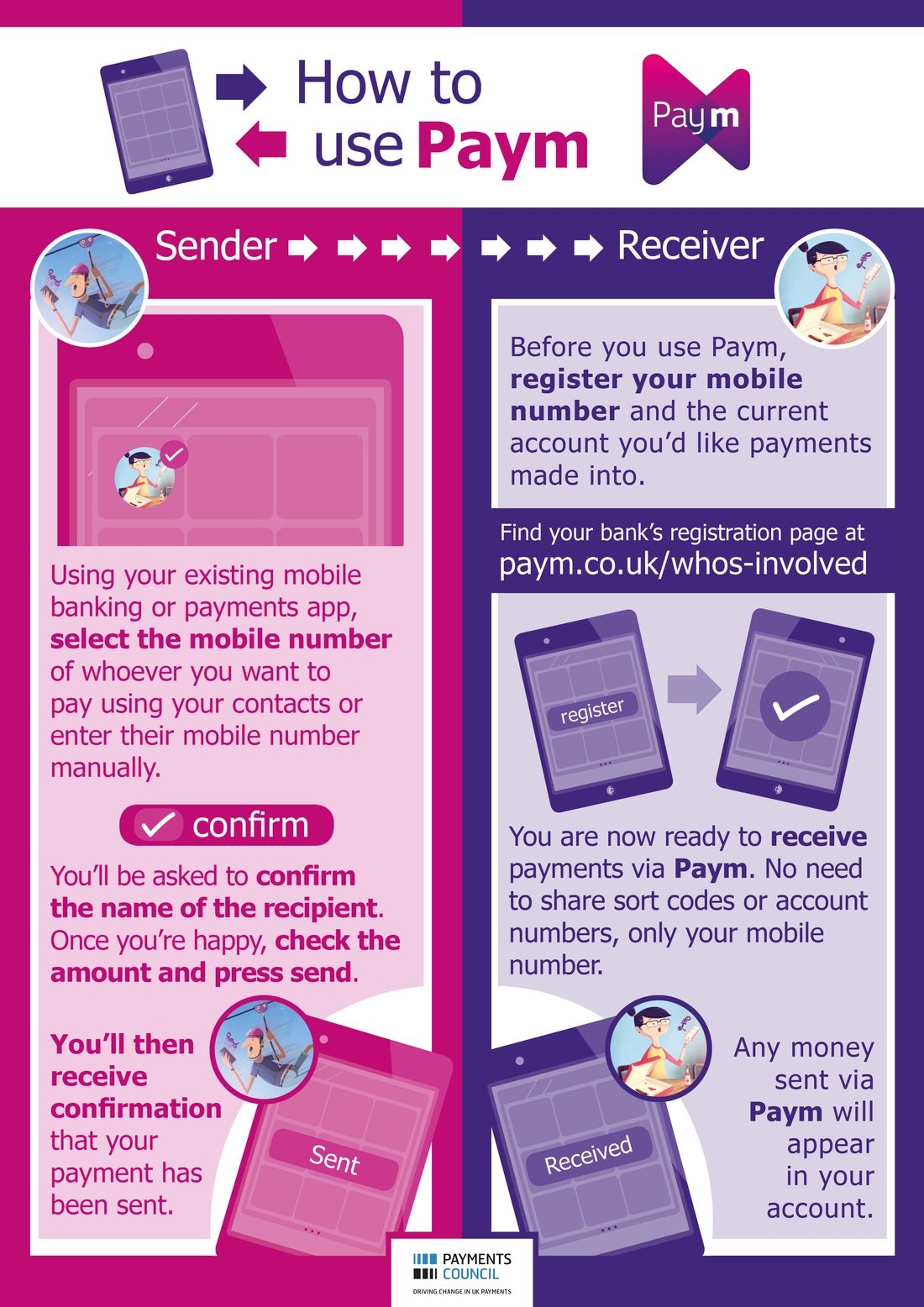
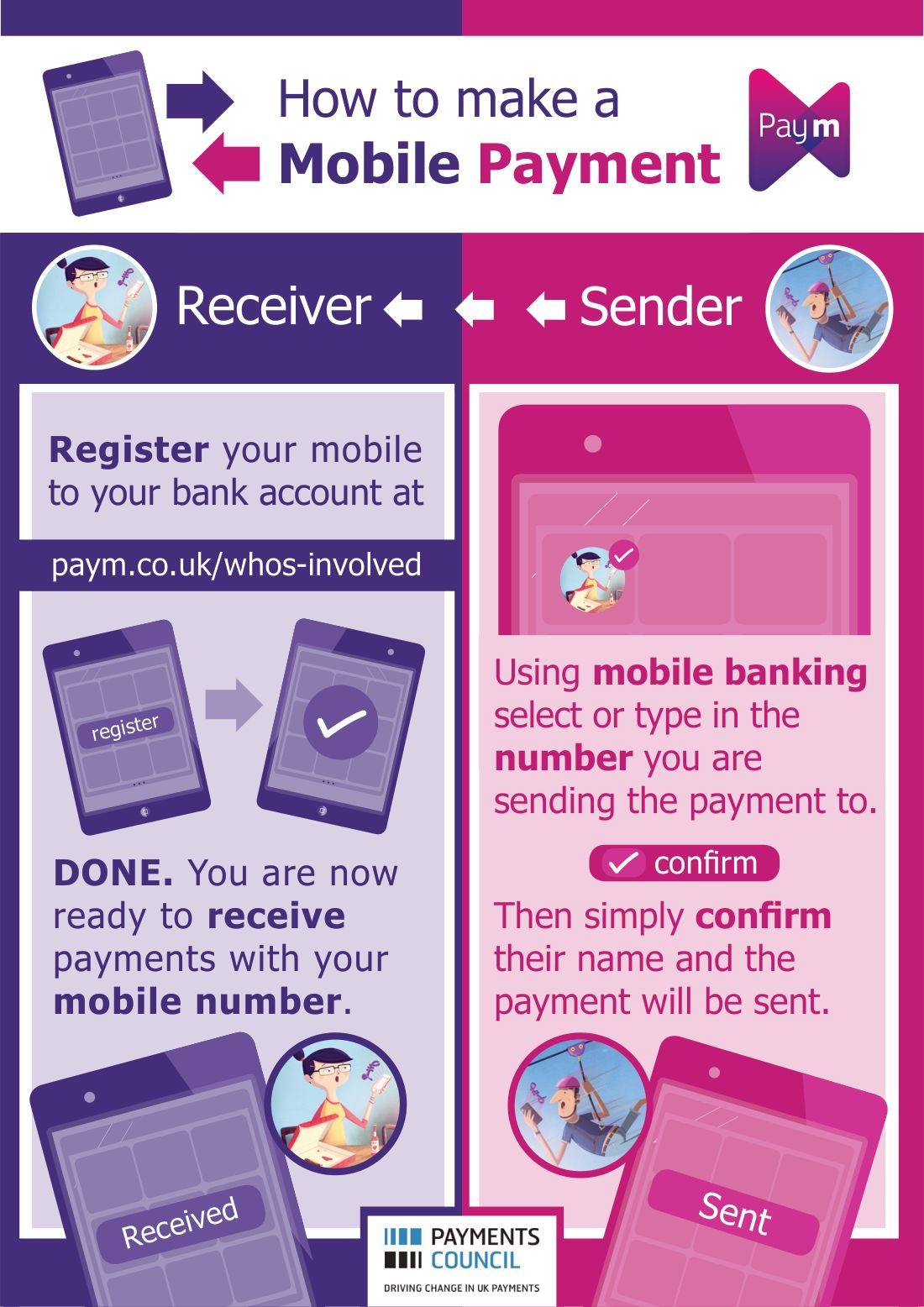
A single-page infographic, How to use Paym: explaining the mobile payment service end to end: sender, receiver, and how to register.
Creative response
One page, dated April 2014, titled “How to use Paym”.
Paym was the UK mobile payment service that let people send money using a mobile number rather than account details. The infographic explains it as a flow: what the sender does, what the receiver sees, and how a user registers, via paym.co.uk.
Infographic design for the Payments Council. The service and its mechanics belong to the client. The explanation, the decision about what order to tell it in and what to leave out, is the design work.
On a scheme-level consumer explainer, communications and account teams sat alongside the design function on the same brief.
Why the sender/receiver split matters
New payment services fail on comprehension before they fail on anything else. The specific difficulty with a mobile-number payment scheme in 2014 was that it had two sides with completely different anxieties: the sender wants to know the money will arrive at the right person, and the receiver wants to know why money is appearing without them having given out account details.
Splitting the page along that line, sender, then receiver, then registration, answers both questions in sequence rather than describing the system from the operator's point of view. It is a small structural decision and it is the whole job of the artefact.
Why the sender/receiver split matters
Results
APR 2014, date on the artefact
paym.co.uk, the registration route the page directs to
The infographic survives; its deployment does not. Nothing here should be read as a claim about Paym's adoption. The artefact explains the service; it does not evidence its uptake.
The work